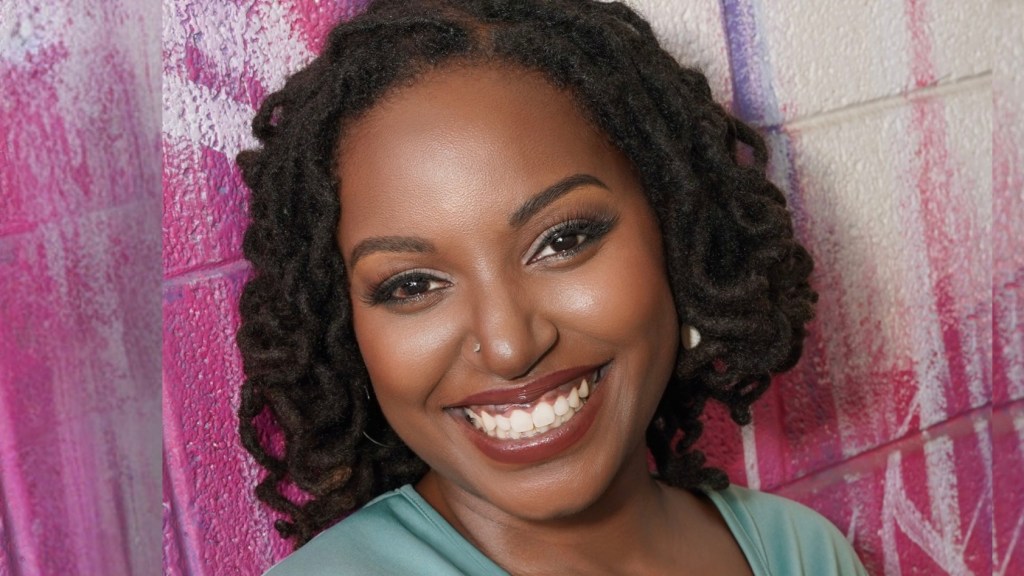
In a cultural moment where authenticity is both currency and resistance, Brittany Frizzelle is not asking for permission—she’s leaping.
“I’m leaping and diving into my authenticity
And landing in the sea of love.”
The line, pulled from her poem Back to Me, is more than a reflection—it’s a declaration. It captures the essence of Frizzelle’s work and the movement she’s helping to shape: one rooted in self-reclamation, collective power, and unapologetic truth-telling.
As a featured voice uplifted by the African American Women Artist Collective (AAWA), Frizzelle represents a generation of Black women creators who are not only telling their stories—but redefining how those stories are told, shared, and honored.
A Literary Force Rooted in Legacy
Frizzelle’s latest achievement, the anthology Telling Our Own Story, is already being recognized as a defining cultural text. The collection brings together 50 of the most important contemporary Black women essayists, poets, artists, and writers working today—an ambitious and necessary archive of brilliance across disciplines.
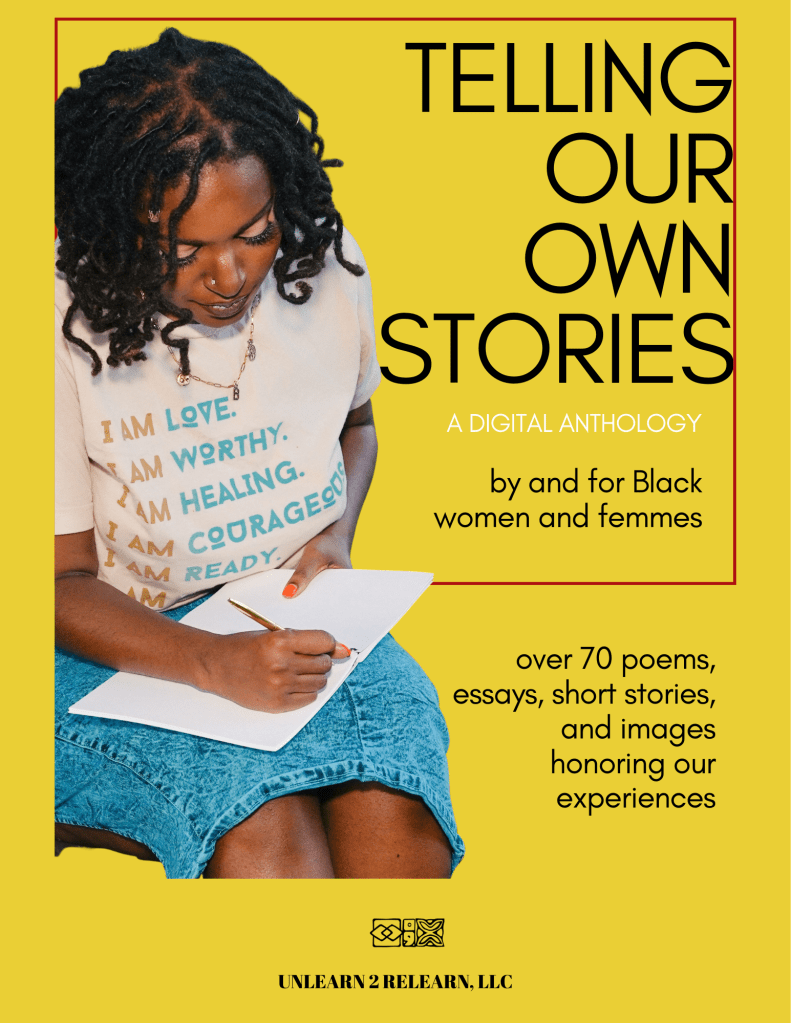
Featuring visionary creatives like Afrofuturist painter Jasimen Phillips, poet Brendane A. Thymes, film director Micole Williams, and multimedia artist Tosh Christal, the anthology is both a celebration and a call to action—one that stretches across mediums and generations.
Frizzelle frames the project within a lineage of resistance and artistic courage:
“It is an honor to continue in the legacy of Toni Cade Bambara and amplify our voices during our own battle against empire.”
That lineage matters. But what Frizzelle is building is not just a continuation—it’s an expansion.
The Voices Shaping the Moment
Part of what makes Telling Our Own Story so impactful is the intentional diversity of voices and disciplines represented within it.
Jasimen Phillips, an Afrofuturist painter, reimagines Black existence beyond the constraints of history. Her work places Black women at the center of expansive, speculative worlds—spaces where they are free, powerful, and fully realized. In many ways, her art visually manifests the same liberation Frizzelle writes into being.
Brendane A. Tynes is a scholar, poet, and cultural anthropologist whose work centers Black women, girls, and queer communities. Her impact lies in how she bridges scholarship, storytelling, and healing—offering frameworks for understanding violence, care, and liberation while creating spaces for Black people to reclaim their narratives on their own terms.
Micole Williams, working in film, expands storytelling into the cinematic realm. Her direction centers nuanced, everyday Black experiences—stories that resist stereotype and instead lean into emotional depth and authenticity. Her presence in the anthology underscores that narrative power extends far beyond the page.
Tosh Christal, a multimedia artist, represents the future of storytelling. Through digital, visual, and immersive forms, her work explores identity, healing, and transformation in ways that invite participation as much as observation. She pushes the boundaries of how stories are told—and who gets to tell them.
Together, these artists do more than contribute—they create an ecosystem. One where storytelling is multidimensional, collaborative, and deeply rooted in truth.
Beyond the Page: A Life Lived in Purpose
Frizzelle’s artistry cannot be separated from her life’s work. A Durham, North Carolina native, she embodies a multidimensional approach to impact—bridging education, activism, and creativity with intention.
After graduating from Howard University in just three years, she went on to teach elementary school, organize around reproductive justice, and earn a law degree alongside a master’s in Community and Social Change. She is also a self-published author, podcast host, YouTuber, and abortion doula—each role an extension of her commitment to liberation and healing.
Her earlier works, Sometimes I Cry and To All My Students, reveal a writer deeply attuned to vulnerability, growth, and the quiet revolutions that happen within.
But Frizzelle is clear: her greatest titles are relational—daughter, sister, auntie, friend, chosen kin. This grounding in community is not incidental; it is foundational.
The Power of Returning to Self
At the heart of Frizzelle’s voice is a radical idea: that returning to oneself is both a personal and political act.
Her poetry does not shy away from fear, doubt, or internal conflict—but it refuses to stay there. Instead, it moves through those spaces toward something fuller, freer, and more whole.
That journey—of shedding imposed identities and embracing truth—is what makes her work resonate so deeply, particularly for Black women navigating systems that demand fragmentation.
Through Telling Our Own Story and her broader body of work, Frizzelle creates space for that return—not just for herself, but for others.
A Movement, Not a Moment
What AAWA recognizes—and what audiences are beginning to fully grasp—is that Brittany Frizzelle is not simply producing art. She is cultivating a movement.
A movement where Black women’s voices are centered, not curated.
Where vulnerability is strength.
Where storytelling is strategy.
Where love—deep, self-defined, and hard-won—is the destination.
She’s still leaping.
Still diving.
Still landing—firmly—in a sea she’s claimed as her own.
And in doing so, she’s making sure countless others know they can too.
 AAWA
AAWA 
Leave a comment